Garage door hinge problems cause binding, scraping, and uneven movement that puts stress on every component in your door system. Identifying garage door hinge issues early prevents minor wear from turning into major mechanical failure. A broken garage door hinge allows panels to shift out of alignment and creates dangerous gaps between sections. Furthermore, a damaged garage door hinge weakens the connection between panels and can cause a section to fall during operation. Garage door hinge replacement restores smooth operation and eliminates the strain that worn hinges place on rollers, tracks, and cables. In addition, knowing when to replace a garage door hinge saves you from paying for unnecessary full-door repairs. Garage door hinge noise is one of the earliest warning signs that something needs attention.
Likewise, a squeaky garage door hinge usually indicates dry metal-on-metal contact that worsens with every cycle. If your door sounds different or moves unevenly, search for garage door hinge problems near you to get a professional diagnosis.
What Garage Door Hinges Do and Why They Matter
Garage door hinges connect each panel section and allow the door to bend as it travels along the curved track from vertical to horizontal. Specifically, your garage door relies on multiple hinges working together to fold smoothly during every open and close cycle.
Here is why hinges are critical to your door’s operation:
- Hinges connect the top of one panel to the bottom of the panel above it
- They allow panels to pivot at the curved section of the track where the door transitions
- Each hinge holds a roller that rides inside the track
- Standard residential garage doors use between 8 and 14 hinges depending on size
- Different hinge numbers (1, 2, 3, 4, 5) indicate their position on the door and the amount of offset they provide
- End hinges attach to the track rollers while center hinges connect panels without rollers
Because every hinge works under constant stress from the door’s weight and movement, wear is inevitable over time. Therefore, regular inspection catches developing garage door hinge problems before they cause bigger issues.
Common Signs of Garage Door Hinge Problems
Garage door hinge issues produce specific symptoms that are easy to recognize. Furthermore, catching these signs early prevents panel damage, track misalignment, and opener strain.
Here are the most common signs of garage door hinge problems:
- Grinding, squeaking, or popping sounds during door operation
- Also, visible gaps between door panels where they should sit flush
- Furthermore, panels that appear crooked or shifted to one side
- The door hesitates or binds at certain points during travel
- Additionally, metal shavings or dust appear on the floor below the hinges
- Cracks or bending visible on the hinge plate itself
- Finally, rollers that appear tilted or no longer sit straight in the track
A squeaky garage door hinge is often the first sign of trouble. Consequently, unusual sounds deserve inspection even if the door still operates normally. Moreover, garage door hinge noise that changes from occasional to constant indicates accelerating wear.
What Causes Garage Door Hinge Problems
Several factors cause garage door hinge issues to develop over time. Specifically, understanding these causes helps you prevent premature hinge failure.
Normal wear and tear Residential garage doors open and close an average of 1,500 times per year. Consequently, the constant pivoting motion wears the hinge pin and hole, creating looseness that increases with every cycle. Furthermore, this natural wear is the most common cause of garage door hinge problems.
Lack of lubrication Dry hinges create metal-on-metal friction that accelerates wear and produces garage door hinge noise. Furthermore, a squeaky garage door hinge almost always indicates insufficient lubrication. In addition, dry hinges generate heat from friction that can weaken the metal over time.
Rust and corrosion Moisture exposure causes rust that eats away at hinge metal and freezes the pivot point. Consequently, rusty hinges bind instead of pivoting smoothly. Furthermore, coastal and humid environments accelerate corrosion on unprotected hinges.
Incorrect hinge type Using the wrong hinge number for a specific position puts uneven stress on the hinge and surrounding panel. Specifically, each position requires a hinge with the correct amount of offset to match the track radius. Moreover, a damaged garage door hinge sometimes results from using a replacement hinge with the wrong specifications.
Impact damage Hitting the door with a vehicle, falling objects, or heavy impacts can bend or crack hinges. As a result, a broken garage door hinge from impact often damages the surrounding panel bolt holes as well. Furthermore, impact damage sometimes affects multiple hinges along the same panel joint.
How to Diagnose a Broken Garage Door Hinge
Diagnosing a broken garage door hinge requires visual inspection and operational testing. However, always disconnect the opener and secure the door before inspecting hinges up close.
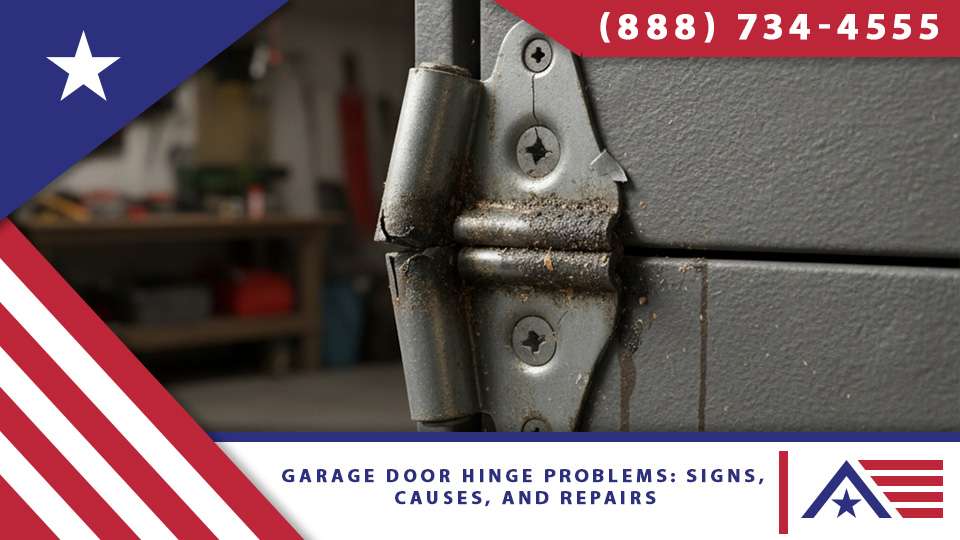
Step 1: Visual inspection First, examine each hinge for cracks, bending, rust, or elongated bolt holes. Specifically, a damaged garage door hinge often shows visible metal fatigue where the plate bends during door operation. Furthermore, check that all bolts are tight and the hinge plate sits flat against the panel.
Step 2: Check for play Next, grip each hinge and try to wiggle it. Consequently, a worn hinge allows noticeable movement between the pin and the hinge plate. Moreover, excessive play means the hinge hole has worn oval from thousands of cycles.
Step 3: Operate the door manually Then, disconnect the opener and slowly lift the door by hand. Specifically, listen for clicking, grinding, or popping at each panel joint as the door moves through the curved section of the track. Furthermore, watch each hinge as the panels fold to identify which one binds or shifts.
Step 4: Check roller alignment Finally, inspect the rollers attached to each end hinge. Specifically, a worn hinge causes the roller to sit at an angle rather than straight in the track. In addition, a tilted roller creates scraping sounds and accelerates track wear.
If you find a broken garage door hinge during inspection, do not continue operating the door until it is repaired. Therefore, a failing hinge under the full weight of the door can snap without warning.
Garage Door Hinge Replacement Process
Garage door hinge replacement is straightforward for experienced technicians but risky for DIY homeowners. Specifically, the door must be properly supported because removing a hinge temporarily disconnects the panel joint.
Here is what professional garage door hinge replacement involves:
- Securing the door in the open position with clamps on the track
- Also, removing the bolts that attach the damaged hinge to both panels
- Furthermore, removing the roller from the track if it is an end hinge
- Installing the correct replacement hinge with the proper offset number
- Additionally, reinserting the roller and ensuring it sits straight in the track
- Tightening all bolts to the manufacturer’s specification
- Finally, testing the door through several complete cycles to verify smooth operation
Knowing when to replace a garage door hinge versus just lubricating it depends on the damage. Furthermore, a hinge with visible cracks, a worn-through pin hole, or bent metal always needs replacement. Moreover, replacement hinges cost between 5 and 15 dollars each while professional installation including parts typically costs between 75 and 200 dollars depending on how many hinges need replacement.
How to Prevent Garage Door Hinge Problems
Preventing hinge problems extends the life of your entire door system. Furthermore, most garage door hinge issues are preventable with basic maintenance.
Here are effective ways to prevent garage door hinge problems:
- Lubricate all hinges with white lithium grease or silicone spray every six months
- Also, inspect hinges visually during each lubrication for cracks or wear
- Furthermore, tighten hinge bolts annually because vibration loosens them over time
- Listen for new sounds during door operation and investigate immediately
- Additionally, keep the garage dry to prevent rust and corrosion on hinge metal
- Never use WD-40 as a long-term lubricant because it dries out quickly and attracts dust
- Finally, schedule professional maintenance annually to catch wear you might miss
These preventive steps take less than fifteen minutes twice a year. Consequently, regular hinge maintenance prevents the grinding, binding, and panel damage that come from neglected garage door hinge issues.
When to Call a Professional
Some hinge problems require professional tools and expertise to fix safely. Therefore, contact a technician for garage door hinge problems near you if any of the following apply:
- You see a cracked or broken hinge on any panel joint
- The door binds or jams at the curved section of the track
- Multiple hinges show signs of wear at the same time
- Panel gaps are visible and growing wider
- The door makes loud popping or snapping sounds at a specific point during travel
- You are unsure which hinge number is correct for each position
A garage door hinge problems expert near you inspects every hinge, identifies the failing components, and replaces them with the correct parts. Specifically, they ensure each hinge matches the proper offset for its position and verify smooth operation through multiple test cycles. In addition, they check rollers, tracks, and panels for related damage caused by the worn hinges.
Do not ignore hinge problems like garage door hinge noise or wait for a hinge to snap under the full weight of your door. Instead, call today to schedule your hinge inspection and restore safe, quiet operation to your garage door.
Phone: (888) 734-4555
Email: info@usgaragerepair.net
Website: https://www.usgaragerepair.net/