Garage door keypad problems prevent you from entering your garage when you need access the most. Identifying garage door keypad issues quickly restores keyless entry and keeps your daily routine running smoothly. A garage door keypad not working leaves you locked out and scrambling for an alternative way into your home. Furthermore, a garage door keypad malfunction can result from dead batteries, worn buttons, or a lost connection to the opener. Garage door keypad programming resolves many issues because keypads lose their paired code after power outages and system resets. In addition, knowing how to reprogram a garage door keypad saves you from paying a technician for a simple fix. Sometimes garage door keypad replacement is the only option when the unit has suffered water damage, physical wear, or internal circuit failure.
Likewise, knowing when to replace a garage door keypad prevents wasted time troubleshooting a unit beyond repair. If your keypad has stopped responding, search for garage door keypad problems near you to get professional help fast.
How Your Garage Door Keypad Works
Understanding how your keypad communicates with the opener helps you diagnose garage door keypad problems accurately. Specifically, a wireless keypad mounts outside your garage and sends a coded signal to the opener when you enter the correct PIN.
Here is how the keypad system operates:
- You enter your personal identification number on the keypad buttons
- The keypad transmits a radio frequency signal containing the coded PIN to the opener receiver
- The receiver verifies the code and activates the motor to open or close the door
- Modern keypads use rolling code technology that changes the transmission code with every use
- The keypad operates on battery power independent of your home’s electrical system
- Most keypads allow temporary access codes for guests and service providers
Because the keypad relies on batteries, wireless transmission, and electronic pairing, any failure in these components creates garage door keypad issues.
Common Causes of Garage Door Keypad Problems
Garage door keypad issues develop from several predictable causes. Furthermore, identifying the specific cause determines whether you need a simple fix or professional garage door keypad replacement.
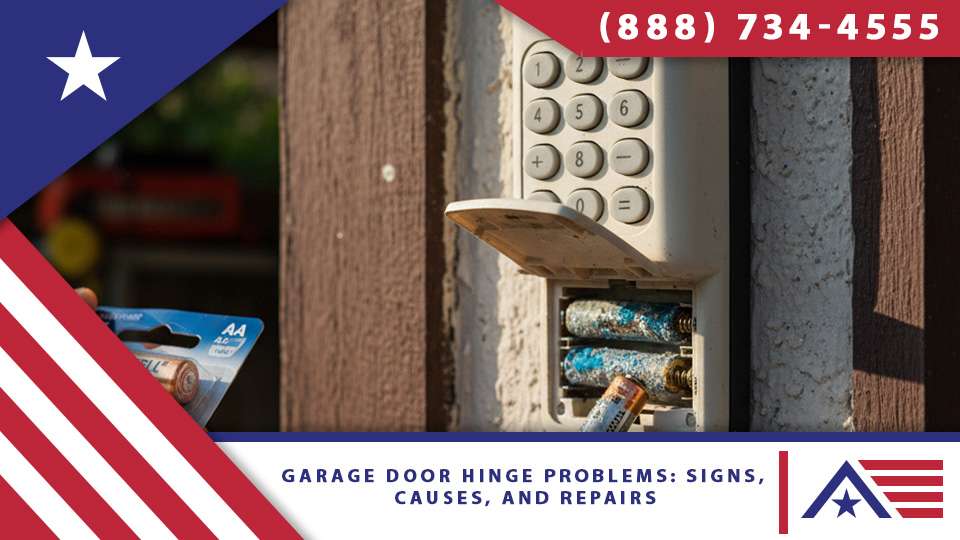
Dead or weak batteries The most common reason for a garage door keypad not working is dead batteries. Furthermore, keypad batteries typically last one to two years. In addition, weak batteries cause the keypad to respond intermittently before failing completely.
Weather damage Rain, humidity, extreme heat, and freezing temperatures damage keypad electronics over time. Consequently, moisture corrodes internal circuit connections. Moreover, UV exposure degrades the keypad housing and fades button markings. Furthermore, a garage door keypad malfunction after a heavy rain often indicates water has penetrated the housing.
Worn buttons Years of use wear down the rubber button pads until they no longer make consistent contact with the circuit board. As a result, you press a button and nothing happens or the wrong number registers. In addition, dirty buttons from outdoor grime buildup create poor contact.
Lost programming Power surges, electrical outages, and opener resets erase the keypad code from the receiver memory. Consequently, the keypad sends a signal that the opener no longer recognizes. Furthermore, this requires garage door keypad programming to restore the connection.
Signal interference LED bulbs in the opener, nearby electronics, and metal objects between the keypad and opener can block the radio signal. Specifically, signal interference causes intermittent operation where the keypad works sometimes but not others.
Faulty receiver board When the receiver board inside the opener fails, no wireless device communicates with the opener. Furthermore, if your keypad, remotes, and smartphone app all stop working simultaneously, the receiver board is likely the cause rather than the keypad itself.
How to Fix a Garage Door Keypad Not Working
When your garage door keypad is not working, these troubleshooting steps resolve the most common causes. Furthermore, most garage door keypad malfunction issues fix themselves with basic steps.
Step 1: Replace the batteries First, open the battery compartment and install fresh batteries. Specifically, most keypads use a 9-volt battery or AA batteries. Furthermore, even batteries that seem recent should be replaced as the first troubleshooting step.
Step 2: Clean the buttons Next, wipe the keypad buttons and surface with a damp cloth to remove dirt and grime. Consequently, cleaning restores proper button contact on keypads with buildup from outdoor exposure.
Step 3: Test the wall button and remote Then, check if the wall button and remote control work. Specifically, if both work but the keypad does not, the problem is isolated to the keypad. However, if nothing works, the opener receiver or power supply is the issue.
Step 4: Reprogram the keypad After basic checks, try garage door keypad programming to restore the connection. Specifically, press the learn button on the opener unit, then enter your desired PIN on the keypad and press enter within 30 seconds. Furthermore, the opener light should flash to confirm successful programming.
Step 5: Check for interference Finally, remove any LED bulbs from the opener and test the keypad again. In addition, make sure the opener antenna wire hangs straight down without being coiled or pinched.
If these steps do not resolve the problem, the keypad hardware itself has likely failed and needs professional attention.
How to Reprogram a Garage Door Keypad
Garage door keypad programming takes less than two minutes and resolves most connection issues. Furthermore, knowing how to reprogram a garage door keypad is a skill every homeowner should have.
Standard programming process:
- Locate the learn or program button on the back or side of your opener motor unit
- Press and release the learn button so the indicator light turns on
- Within 30 seconds, go to the keypad and enter your desired PIN
- Press the enter or send button on the keypad
- The opener light will flash or click to confirm the new code
- Test by entering the PIN and pressing enter to open the door
To change your existing PIN:
- Press and hold the learn button on the opener for about 10 seconds until the light turns off
- This erases all programmed codes from the receiver
- Then reprogram your keypad with a new PIN following the steps above
- Also reprogram all remotes since erasing codes removes everything
Tips for choosing a secure PIN:
- Avoid obvious numbers like 1234, 0000, or your house number
- Also, use a four to six digit code for better security
- Furthermore, change your PIN annually or whenever you suspect someone has your code
If garage door keypad programming fails after multiple attempts, the keypad may be incompatible with your opener or the receiver needs replacement.
When Garage Door Keypad Replacement Is Necessary
Sometimes garage door keypad problems cannot be fixed with batteries or reprogramming. Therefore, garage door keypad replacement becomes necessary when the hardware has failed.
Here are signs you need to replace a garage door keypad:
- The keypad does not respond after fresh batteries and reprogramming
- Also, buttons are physically worn through or stuck
- Furthermore, the housing is cracked and water has entered the unit
- The display or backlight no longer illuminates
- Additionally, the keypad is incompatible with a new opener you installed
- Corrosion is visible on the battery contacts or circuit board
Knowing when to replace a garage door keypad saves you from endless troubleshooting. Furthermore, replacement keypads cost between 25 and 60 dollars for most brands. In addition, universal keypads compatible with multiple opener brands cost between 30 and 50 dollars. Consequently, replacement is affordable and often faster than repair.
How to Prevent Problems
Preventing keypad problems extends the life of your unit and maintains reliable access. Furthermore, simple habits protect your keypad from the most common failure causes.
Here are effective ways to prevent garage door keypad problems:
- Replace batteries annually before they die
- Also, install a weather cover or shield over the keypad to protect it from rain and sun
- Furthermore, clean the buttons and housing every few months with a damp cloth
- Avoid pressing buttons with excessive force that wears the contacts
- Additionally, change your PIN if you notice the keypad responding slowly to certain numbers
- Test the keypad monthly to catch problems before you need it urgently
- Finally, keep the opener antenna straight and unobstructed for strong signal reception
These preventive steps cost nothing but keep your keypad working reliably. Consequently, a few minutes of care each month prevents lockout situations.
When to Call a Professional
Some keypad problems indicate deeper issues with the opener system. Therefore, contact a technician for garage door keypad problems near you if any of the following apply:
- All wireless devices including remotes and keypads stop working simultaneously
- Reprogramming fails despite following the correct steps for your opener brand
- The opener does not respond to any input from any device
- You need a keypad installed for the first time on an existing opener
- Your opener is an older model and you need a compatible keypad recommendation
A garage door keypad problems expert near you tests the keypad signal, receiver board, antenna, and wiring to pinpoint the exact failure. Specifically, they carry replacement keypads and receiver boards for all major brands. In addition, they program and test everything on site before leaving.
Do not let a broken keypad lock you out of your own garage. Instead, call today to schedule your keypad diagnosis and restore keyless entry to your home.
Phone: (888) 734-4555
Email: info@usgaragerepair.net
Website: https://www.usgaragerepair.net/